Understanding pest animals
Feral Pigeons
Highly Adaptable Urban and Agricultural Pests
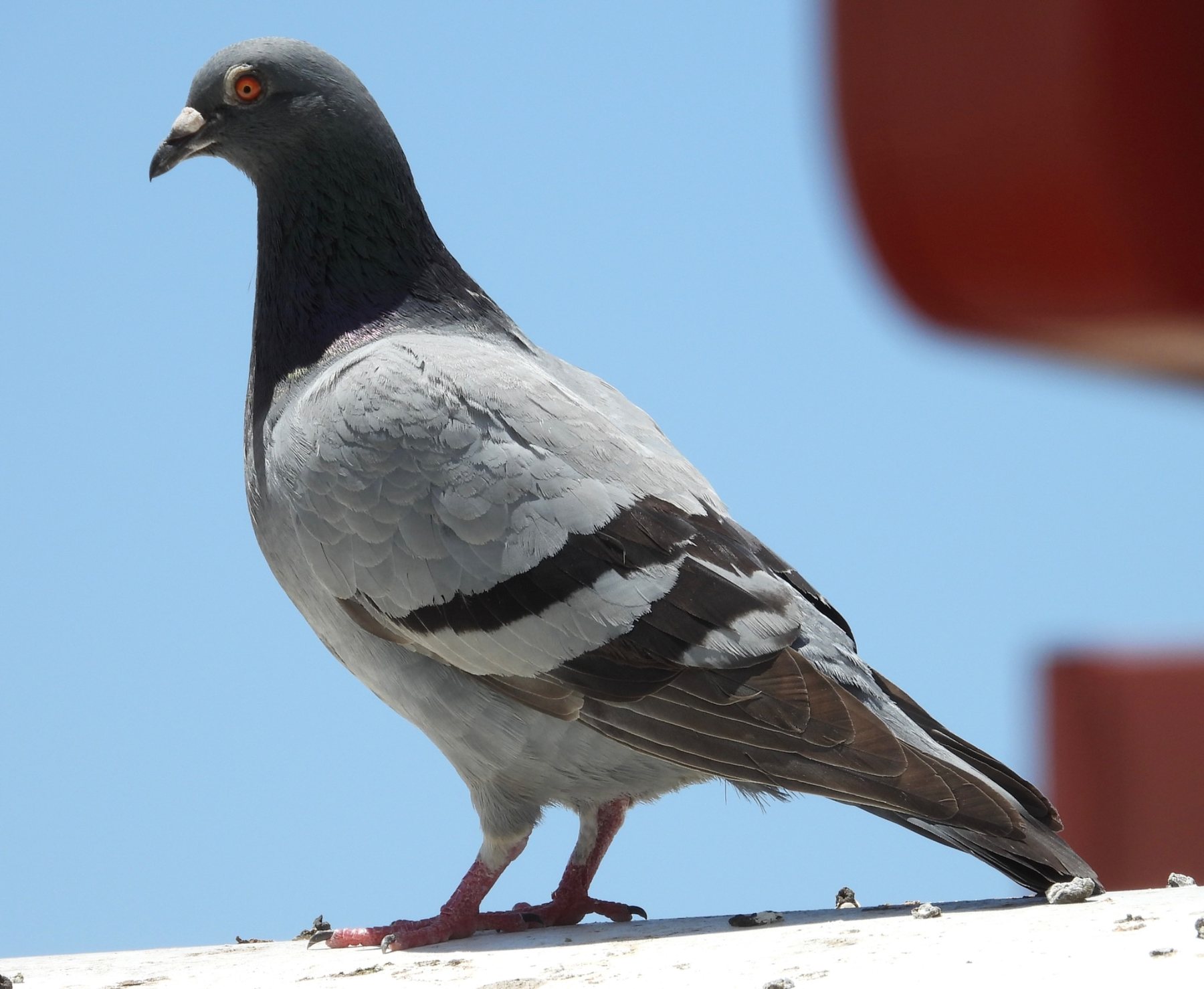
Feral pigeons are descendants of domesticated rock pigeons and are now established throughout many urban, industrial and agricultural environments.
They thrive around buildings because structures such as roofs, ledges, beams and solar panels provide artificial equivalents of the cliffs and rocky ledges used by their wild ancestors.
Food can also be readily available around livestock facilities, grain storage areas, wineries, food processing sites and urban environments.
What problems can feral pigeons cause?
Large pigeon populations can produce substantial quantities of droppings.
Over time, this may result in:
- fouling of roofs, walkways, equipment and vehicles
- contamination of stored feed and water
- blocked gutters and drainage systems
- corrosion and staining of building materials
- contamination around food production or agricultural environments
- increased cleaning and maintenance costs
- nesting material accumulating around buildings and machinery
- potential biosecurity and disease management concerns.
Pigeons can move between urban, rural, coastal and agricultural environments, which can make long-term population management challenging.
Why can control be necessary?
Simply removing nesting material or cleaning droppings does not necessarily address the underlying population.
Where pigeons continue to roost, feed or breed at a site, ongoing damage and contamination can quickly return.
Effective management may involve population reduction combined with exclusion, removal of food sources, building modification or other measures depending on the site.
Need help with feral pigeons?
FEMS can discuss the species, site and impacts you are experiencing and determine whether targeted control is appropriate.
Make an Enquiry