Understanding pest animals
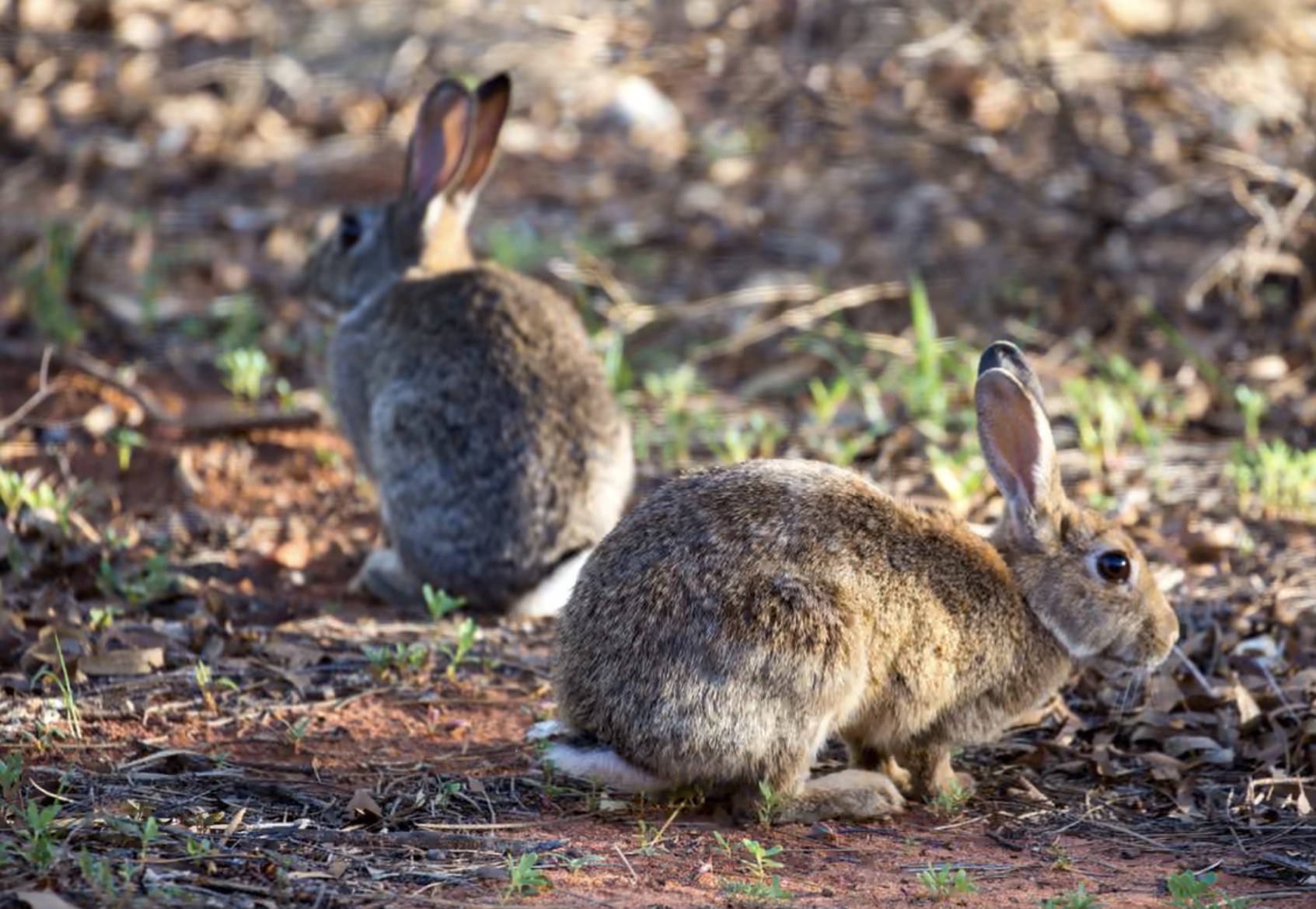
European Rabbits
One of Australia's Most Destructive Introduced Herbivores
European rabbits have had an enormous environmental and agricultural impact since their introduction to Australia.
Their ability to reproduce rapidly and survive across a wide range of environments allows populations to increase quickly when conditions are favourable.
Environmental impacts
Rabbits can heavily graze young plants and seedlings. This can prevent native vegetation from regenerating and may gradually change the structure and composition of plant communities.
Repeated grazing can also reduce ground cover and contribute to:
- soil erosion
- habitat degradation
- reduced plant diversity
- loss of shelter and food resources for native wildlife
- failure of revegetation and restoration projects.
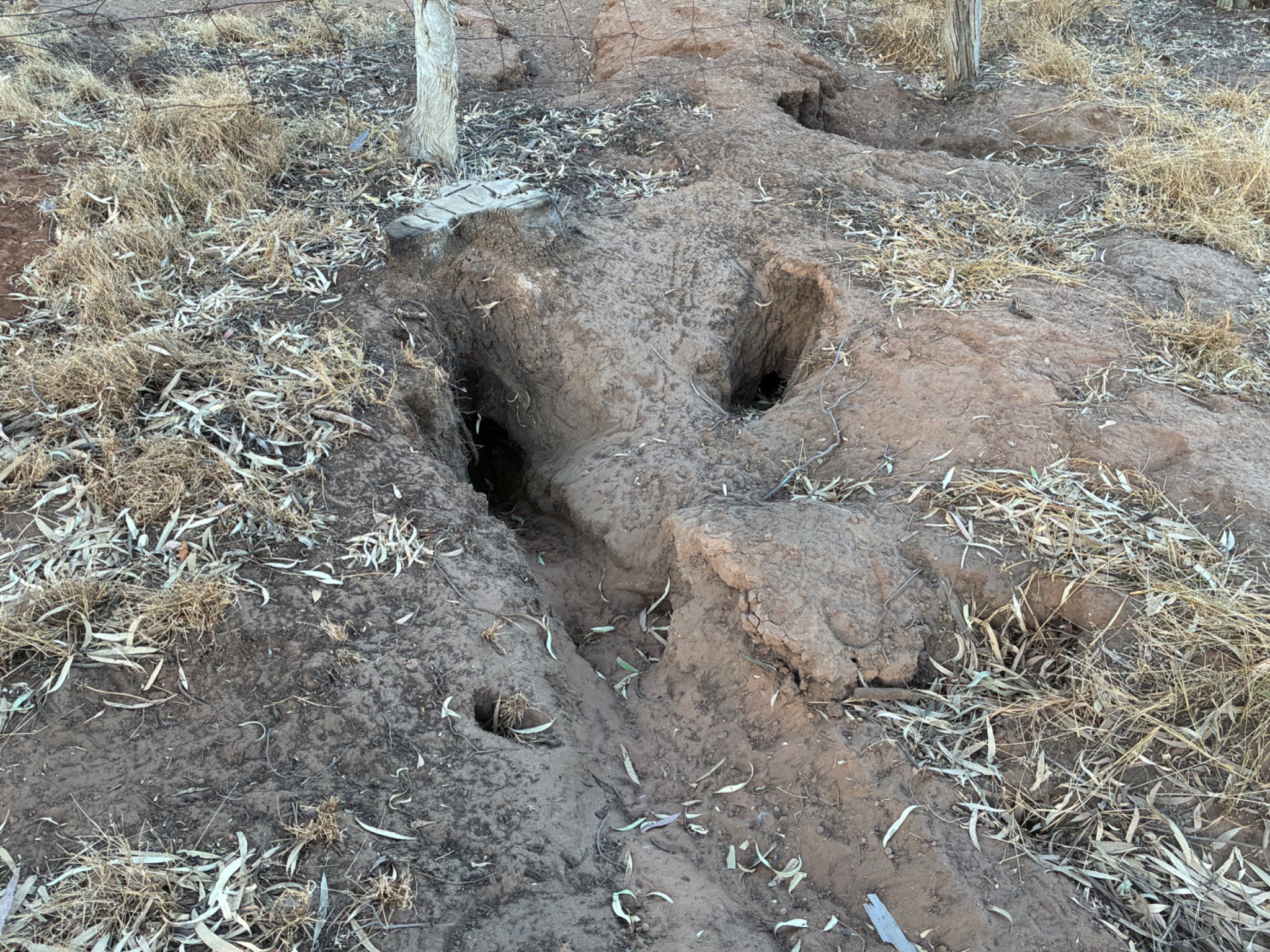
Rabbit warrens can also disturb soil structure, create erosion problems and pose a serious risk to livestock, which can suffer significant leg injuries when stepping into warrens.
Agricultural impacts
Rabbits compete with livestock for pasture and can damage:
- crops
- vineyards
- orchards
- gardens
- newly planted trees and shrubs
- revegetation areas
- landscaping.
Why population control matters
Rabbit populations can recover quickly. For this reason, effective management often requires ongoing control and, where practical, an integrated approach involving methods such as exclusion fencing, warren management and habitat modification.
Need help with european rabbits?
FEMS can discuss the species, site and impacts you are experiencing and determine whether targeted control is appropriate.
Make an EnquiryEnvironmental Impact
Warrens and soil disturbance
Rabbit warrens can disturb and expose soils, undermine vegetation and contribute to erosion and land degradation. This field image shows the physical disturbance that established rabbit activity can create.